Launching OKX Pay — OKX's First P2P Payment Product
Overview
OKX is a global cryptocurrency exchange offering advanced financial services. In 2025, OKX launched Pay — a first-of-its-kind crypto payment product built into the OKX app.
Role
As content designer, I owned all UX content for OKX Pay end to end — from onboarding to edge cases. My responsibilities included:
Product and feature naming
UX content design across the full product
Design reviews with cross-functional leaders
Legal, compliance, and localization reviews
Timeline
2024 - 2025
Challenge
Crypto adoption remains uneven globally. In markets like Brazil and Malta, crypto is part of everyday life. In others, like the US, it's still niche.
To close that gap, we hypothesized that a KYC-enabled, self-custodial wallet with peer-to-peer (P2P) payments could bring crypto into everyday use. Stablecoins like USDC and USDT already represented 40% of buy volume in the OKX app — primarily used as savings tools in inflation-affected regions — making them a natural fit for frictionless, on-chain payments.
This initiative also lays the groundwork for a broader financial ecosystem: merchant payments, yield opportunities, and real-world utility — moving users beyond trading and into everyday crypto engagement.
Goal
Expand OKX beyond trading — so users can send crypto to friends, family, and acquaintances as easily as sending a text, with no fees.
By offering a self-custodial smart wallet for P2P payments, we aimed to:
Drive engagement across the app
Increase Assets Under Management (AUM)
Increase Daily Active Users (DAU)
Beyond retaining existing users, Pay was also an opportunity to attract the crypto-curious — people who hadn't yet taken the leap.
Process
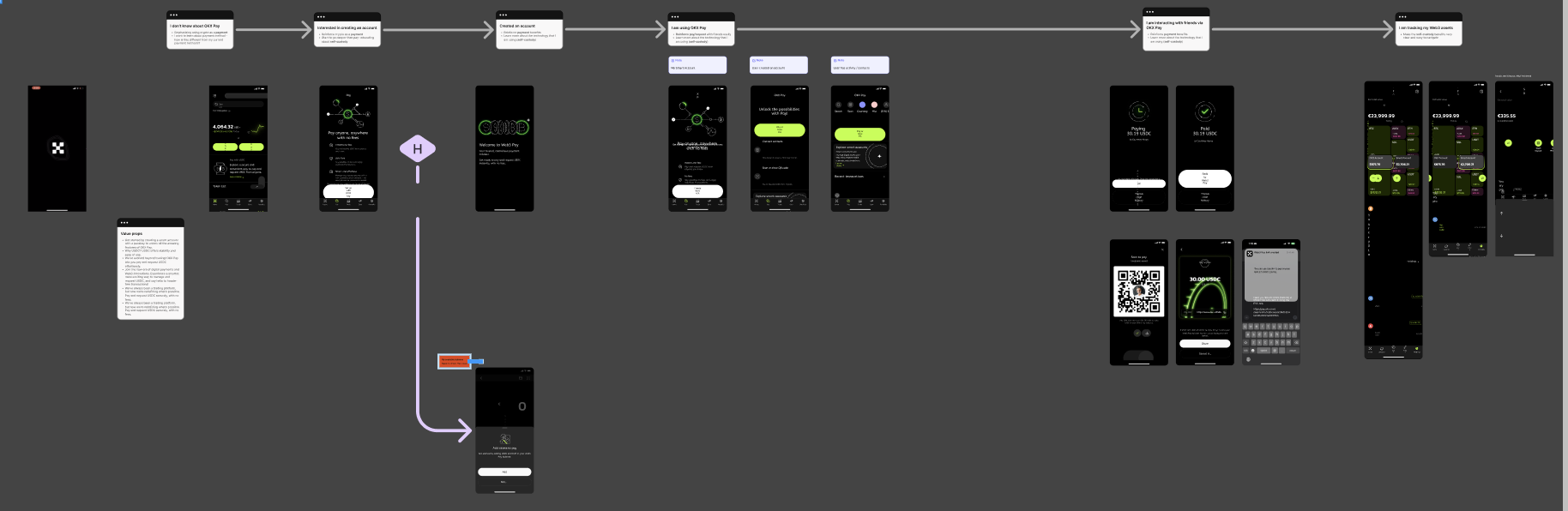
Lo-fi version of the end-to-end Pay flow.
Naming the product: The project's working title was "OKX Web3 Pay." I made the case to simplify it to just Pay — cleaner, more human, and more product-forward. The tradeoff: "Pay" functions as both a noun (the product) and a verb (the action), which required proactive content planning to avoid ambiguity throughout the experience.
Defining the value props: I defined the product's core value propositions to align stakeholders and serve as a source of truth for in-app and marketing content:
Security — Blockchain-backed protection for your assets and transactions.
Ownership — Only you hold the keys to your Pay wallet.
Simplicity — Send and receive crypto anywhere in the world — as easy as texting.
Affordability — Send instantly with zero fees.
Information architecture: A key early decision was where Pay would live in the app. In v1, we explored housing it under a primary tab that expanded into a secondary menu — letting users pay, buy, or sell from one entry point. This avoided adding a sixth tab to the navigation.
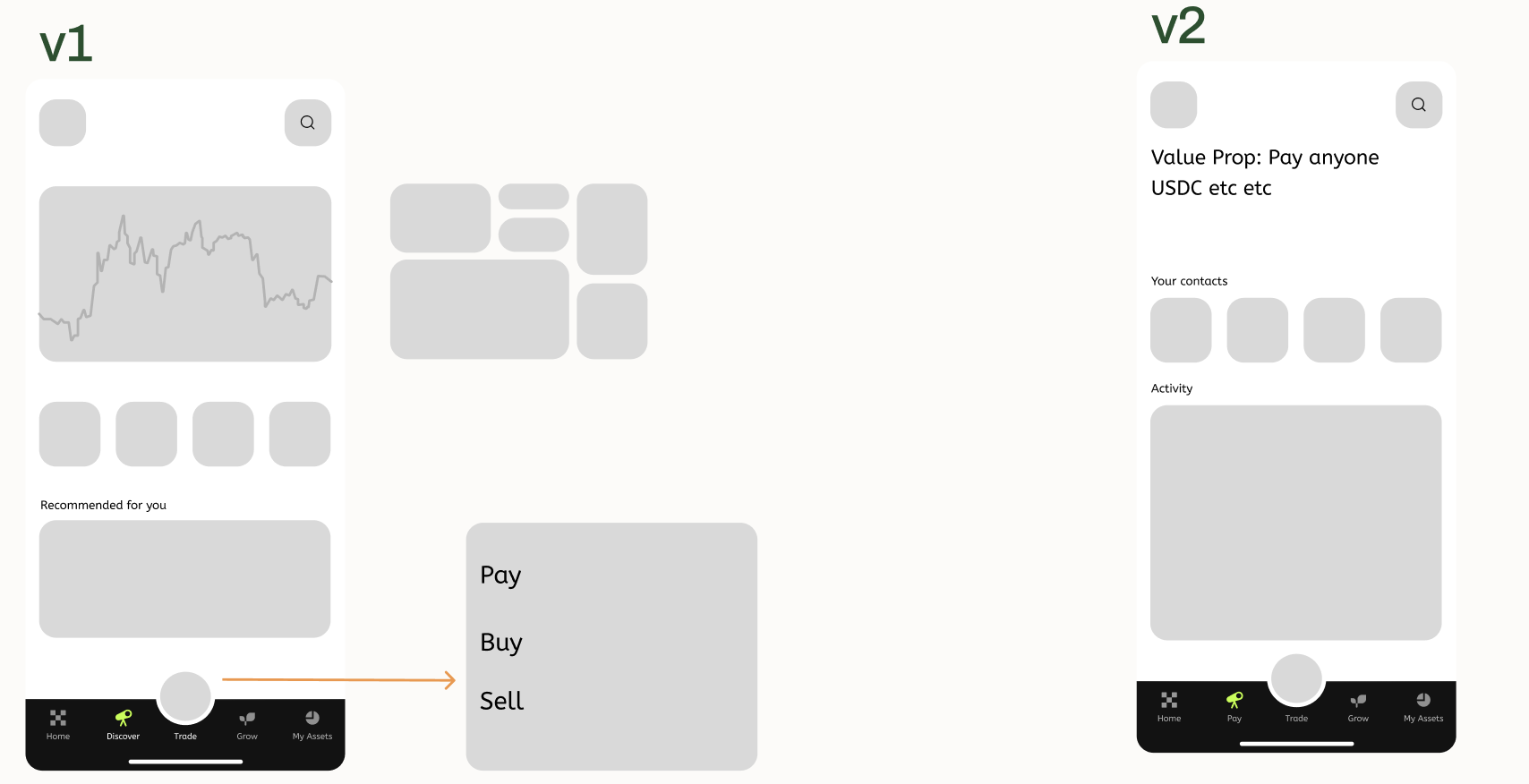
Ultimately, we gave Pay its own dedicated tab (v2) for greater prominence. The tradeoff: we merged the Discover and Homepage tabs, which required coordination with both teams.
Social vs. wallet-forward UI: We also explored leaning into Pay's social dimension (v1), but ultimately prioritized the user's smart wallet balance as the hero of the experience (v2) — keeping the focus on utility.
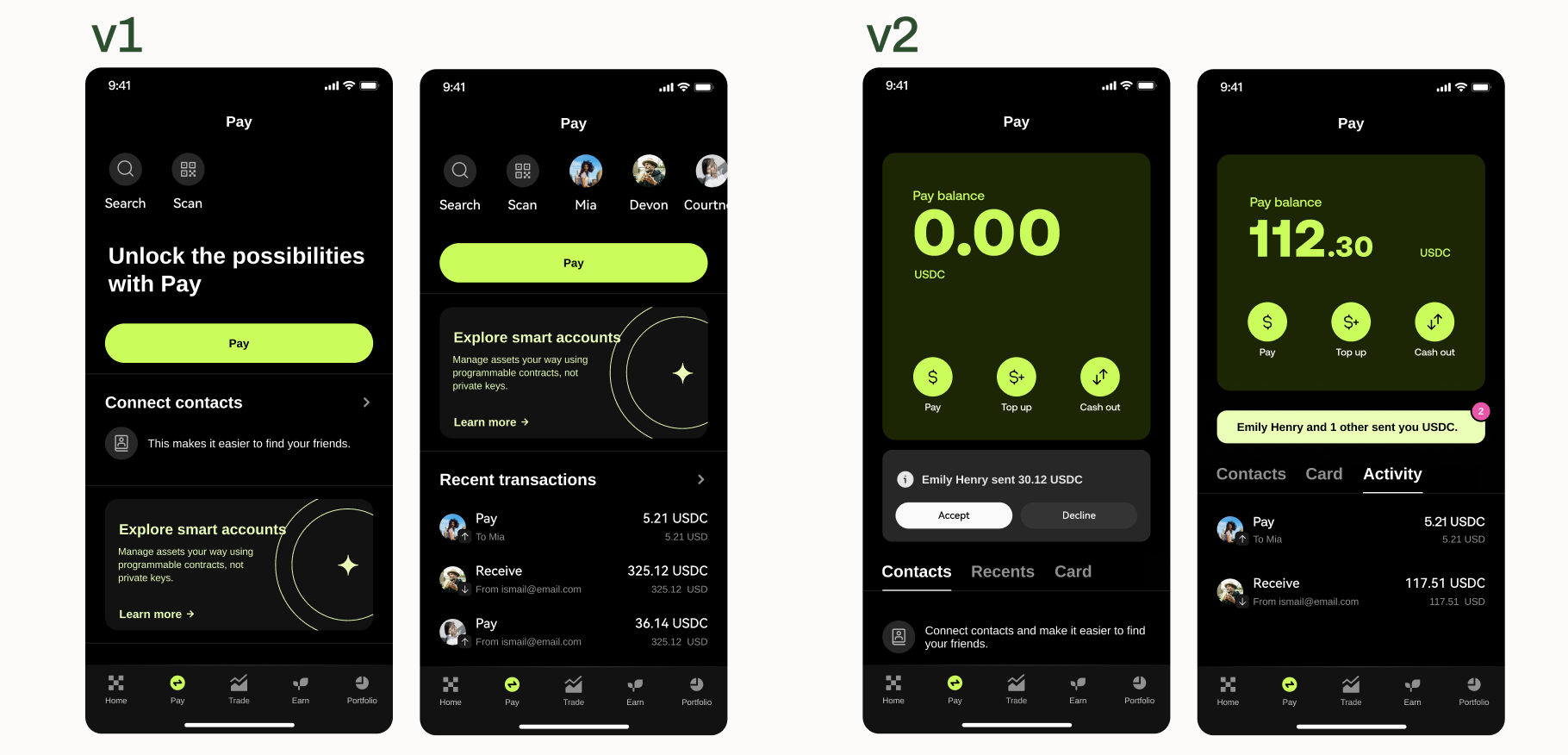
Final experience
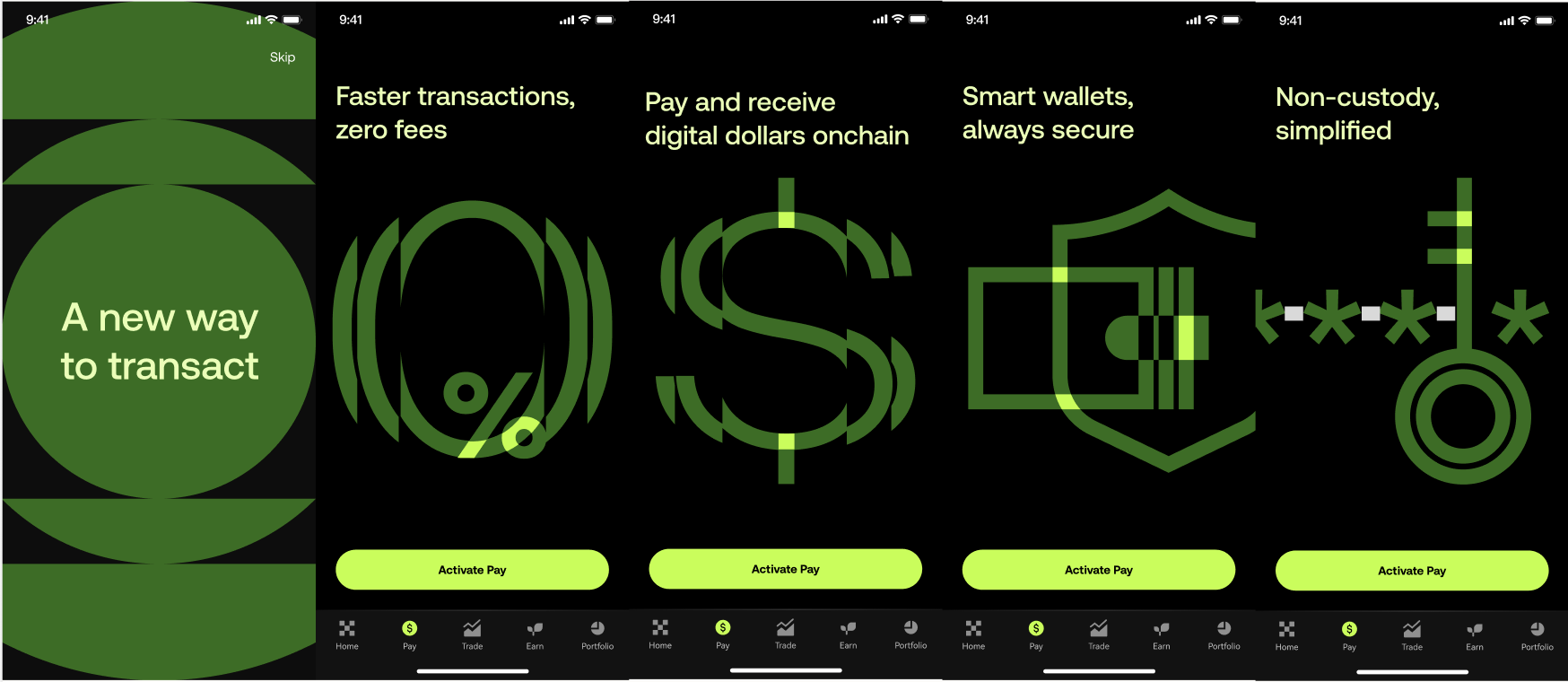
1. Animated intro
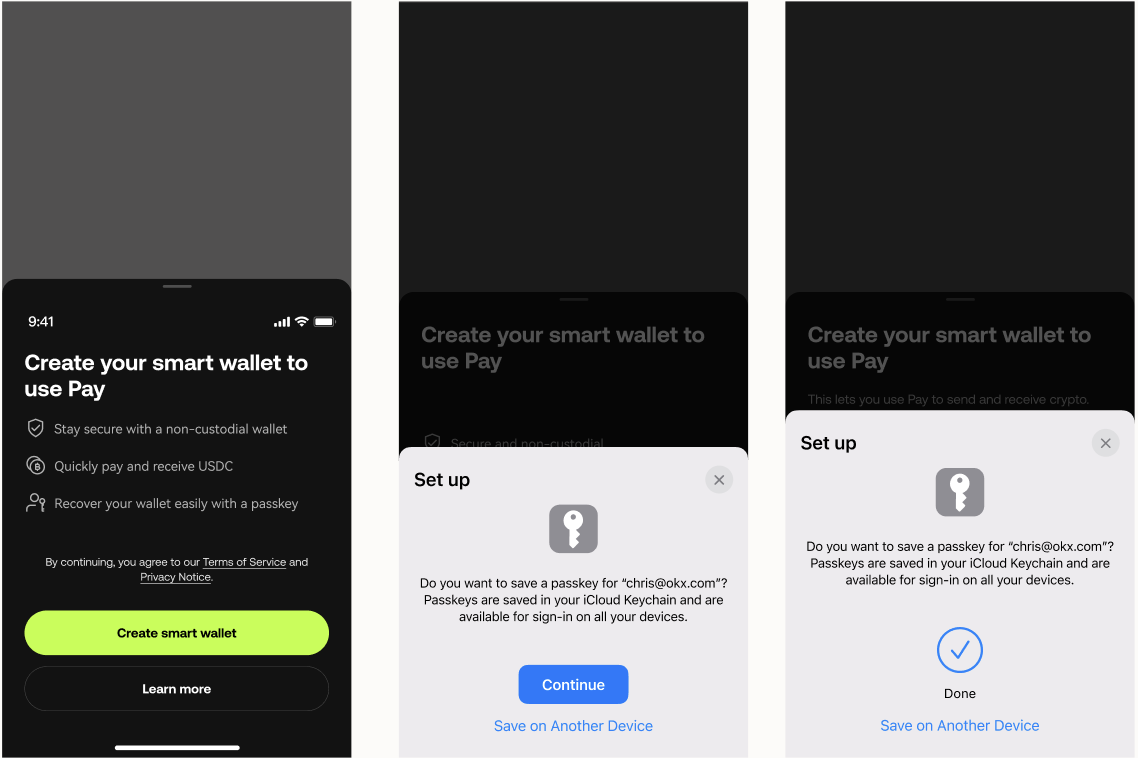
2. Create smart wallet
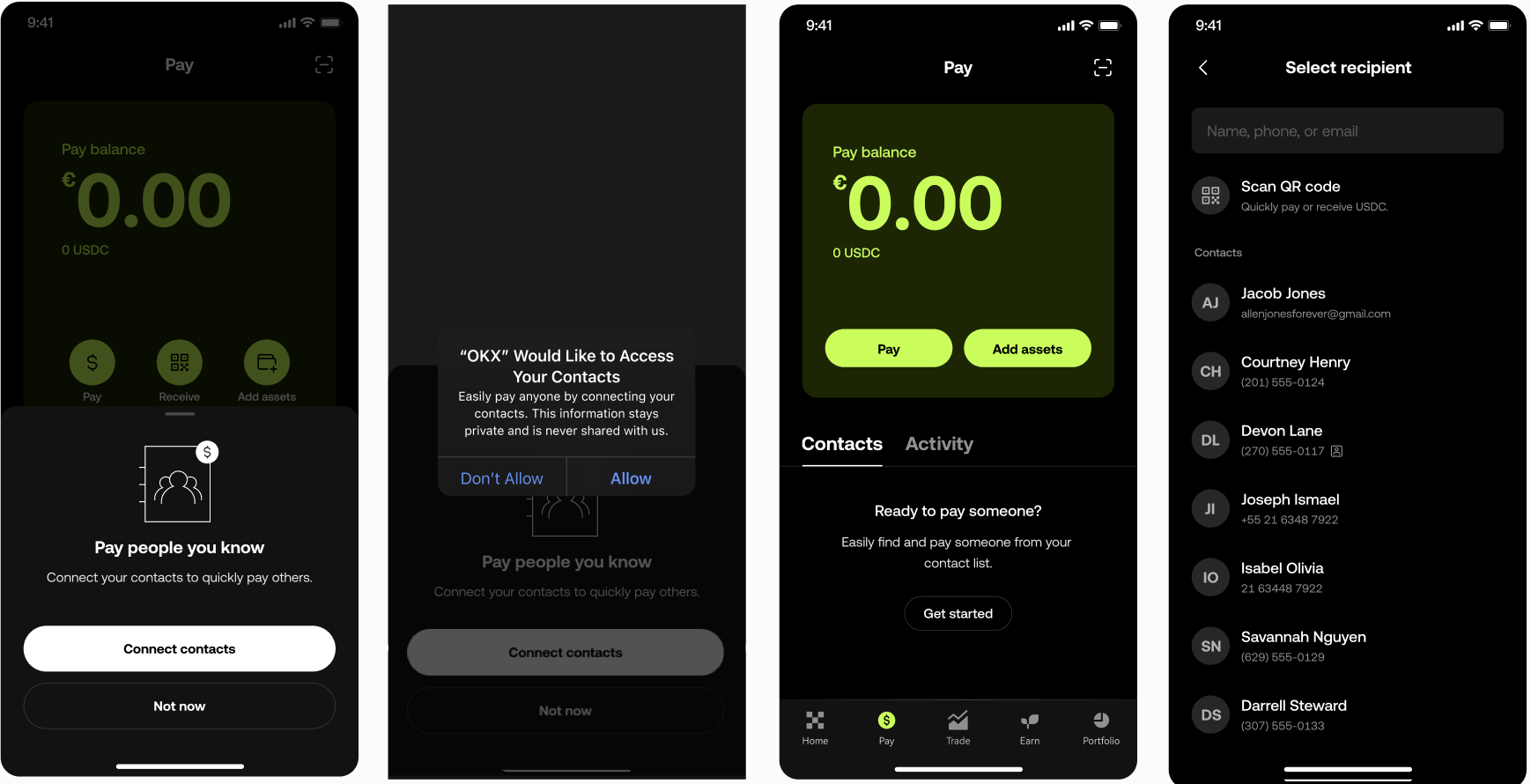
3. Sync contacts
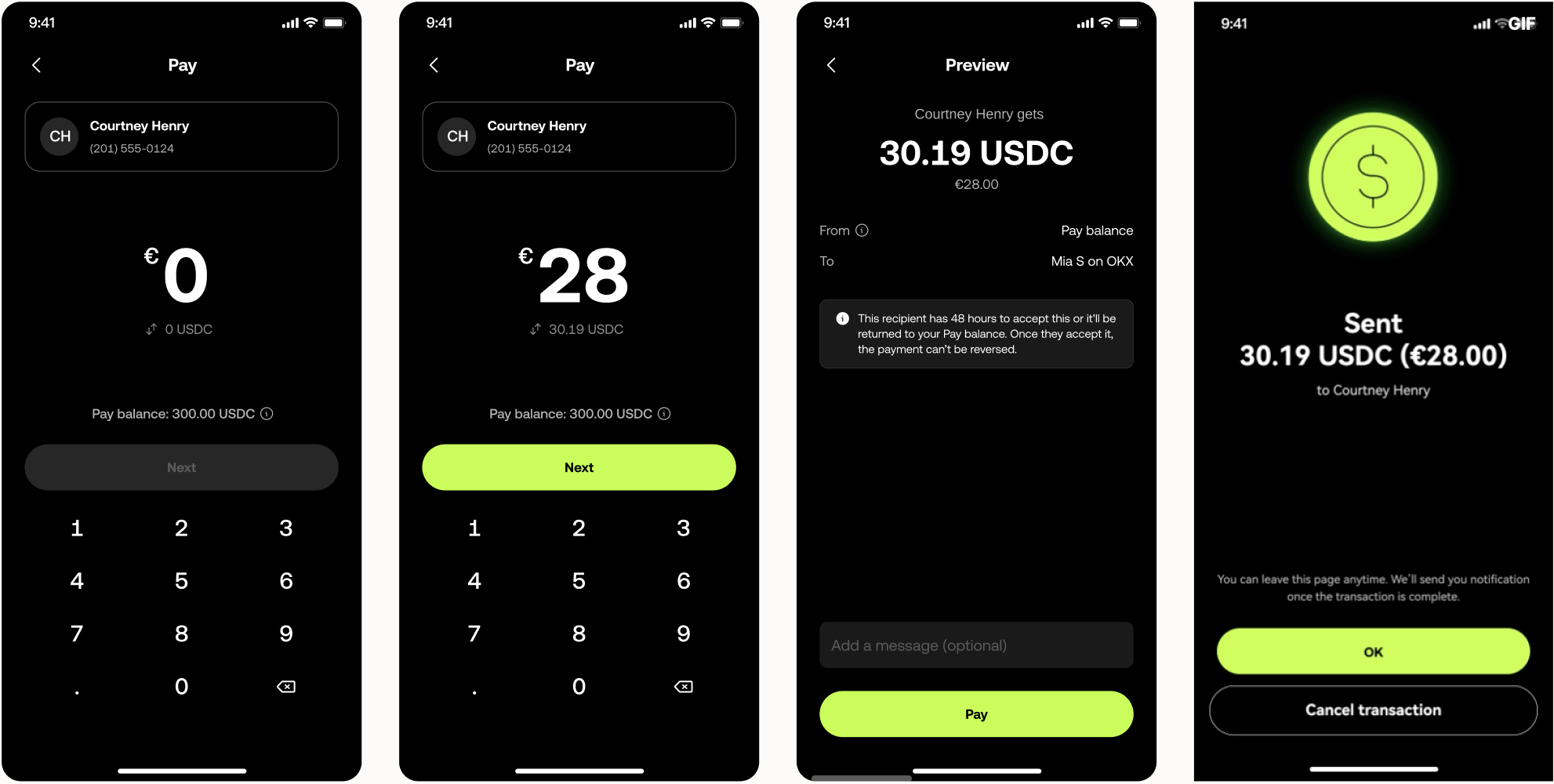
4. Send payment
Results
Pay launched in April 2025. As of September 2025:
$10.1M total assets under management
455K smart accounts created
16.5K daily active users